
The brief for almost every corporate Christmas party is the same: fun but not too wild, something for everyone, please don’t let it be awkward. Entertainment is usually booked somewhere between the venue deposit and the catering quote, once half the budget has already disappeared. Which is a shame — because it’s the one thing that determines whether people are still talking about the night in February.
The right act doesn’t just fill time. It sets the tone, gets people out of their heads, and turns an end-of-year obligation into something worth turning up for. That’s worth thinking about before you default to whatever’s available.
Here’s how to match entertainment to your venue, your theme, and your group — without overcomplicating it.
Start With the Space: Let the Venue Guide Your Choice
Before you book anything, look at where you’re actually holding the party. The venue does most of the decision-making for you — if you let it.
Restaurants, Rooftops, and Function Rooms

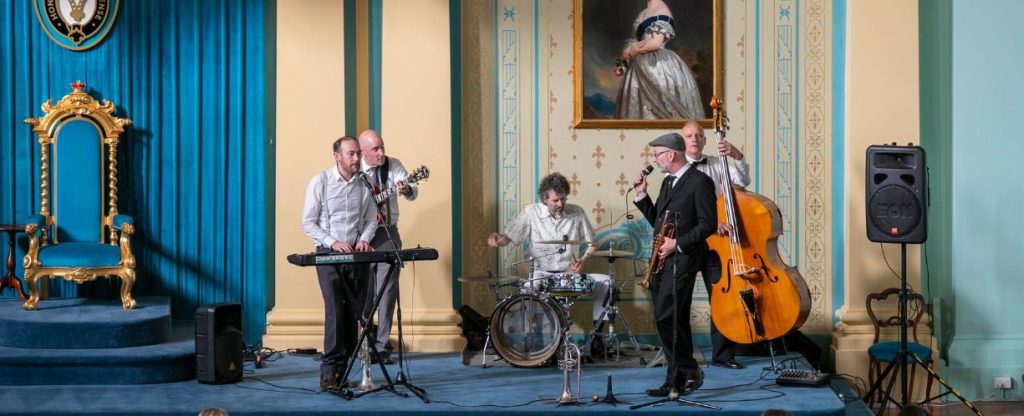
Shared venues, sound limits, neighbours with opinions — subtlety matters here. A live acoustic act or jazz musician can lift the room without turning dinner into a competition between conversation and the PA. Roving performers work well too: they engage without demanding everyone’s attention at once.
(The DJ who played at full volume during entrées at your colleague’s last Christmas party was not reading the room. Don’t let that be you.)
Offices and On-Site Celebrations
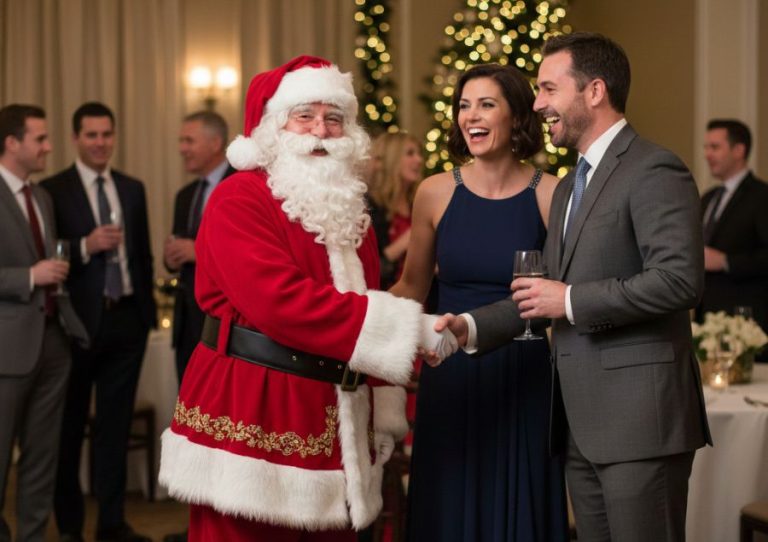
An office party has one fundamental challenge: the space is too familiar. Everyone knows where the photocopier is. The entertainment’s job is to make that irrelevant. Roving magicians, themed characters, and interactive performers are built for exactly this — they move through the space, find the moments, and shift the mood without needing a stage or a sound system the building probably doesn’t have.
Large Venues and Event Spaces
Ballroom, warehouse, large function centre — now you can think properly. Live bands, production shows, headline acts: in a room this size, entertainment isn’t an add-on. It’s the architecture of the night. Get it right and the whole event has a spine. Get it wrong and you’ve just hired a very expensive caterer.

Match Entertainment to Your Christmas Theme
A theme without entertainment to support it is just a mood board. The performers are what make it land — or expose it as a half-finished idea. Pick the right act for the style you’re going for.
Classic Christmas

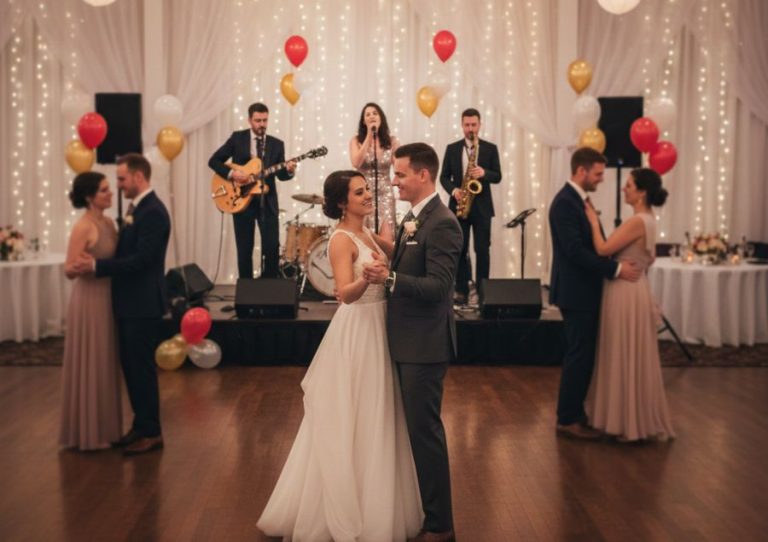
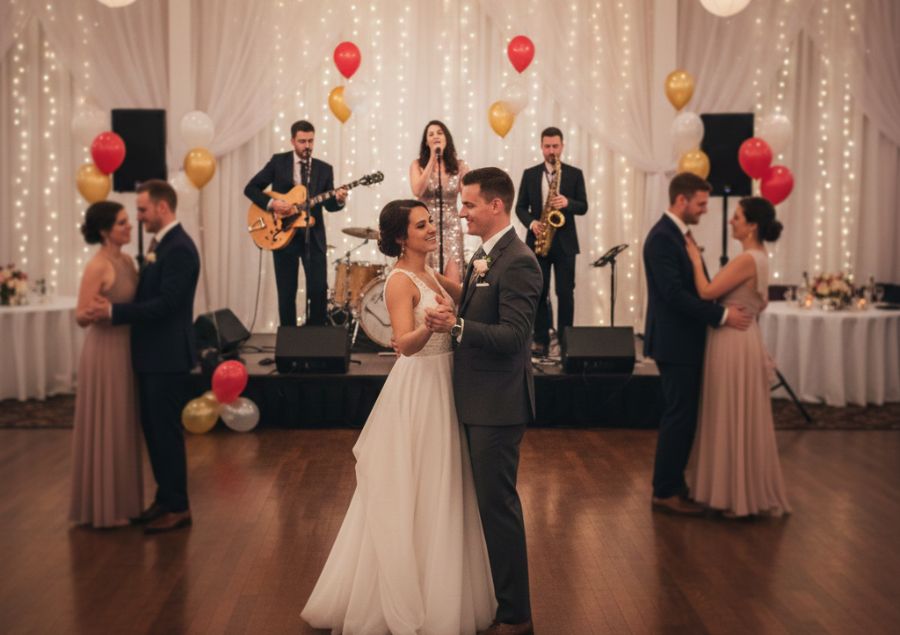
Carol singers, swing bands, jazz ensembles, Christmas-themed roving acts. This is the reliable option — warm, inclusive, works for every age group in the room. Nothing wrong with reliable. Reliable is what gets you rehired next year.
Modern or Minimalist Christmas
Cocktail-style. Rooftop. Somewhere with exposed brick and a considered wine list. The entertainment here needs to match the room’s self-image. A polished DJ, a stylish live act, something sleek that delivers energy without turning the night into a nightclub before 8pm.
Themed or Creative Christmas Events
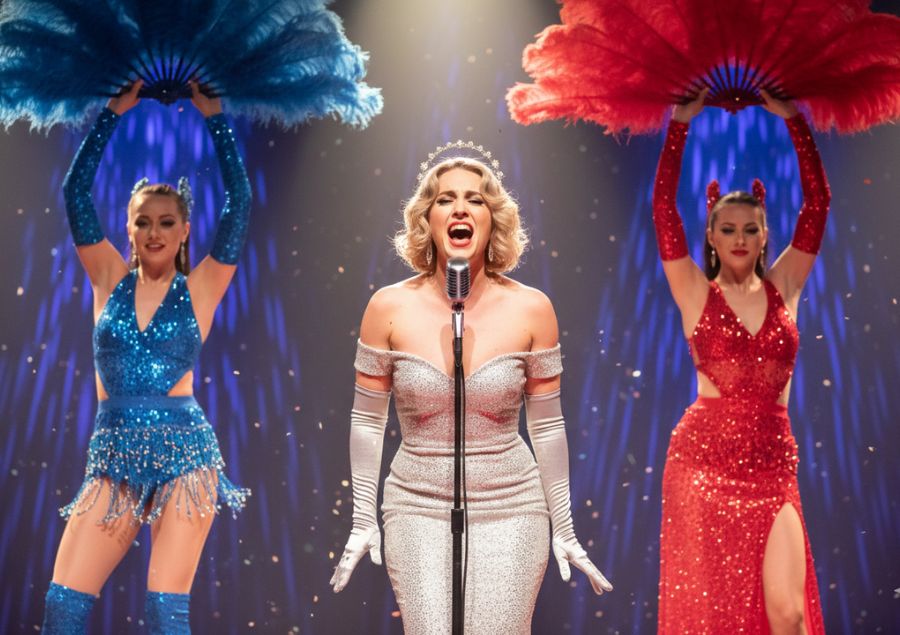
“80s Christmas.” “White Christmas.” “Tropical Noel.” A theme only works if the entertainment commits to it. Performers in costume, tribute acts, specialty entertainers — these are the acts that make a theme feel intentional rather than like someone bought some fairy lights and hoped for the best.
The best Christmas party entertainment ideas don’t just entertain — they’re doing visual and emotional work the room decor alone can’t carry.


Choose Entertainment Based on Group Size
Scale is the thing most people underestimate. An act that’s genuinely brilliant for 25 people can disappear completely in front of 200. And a full production that’s perfect for a ballroom will feel like overkill at a dinner for 30. Match the act to the room before you fall in love with the idea of it.
Small Teams (Under 40 Guests)
Small groups need intimacy, not spectacle. A roving magician who can work a room of 25 is doing something that a headline band simply can’t. Comedians in relaxed settings, acoustic performers, close-up acts — these create the kind of shared moments that actually bring people together, rather than just providing something to stand near.



Medium Groups (40–100 Guests)
This is the sweet spot. Big enough to justify a proper entertainment focus, small enough that you still have flexibility. A live band with some DJing between sets, a feature performance with background music around it, a DJ who knows how to run a room — all of these work. The goal is an event with a natural arc, not a series of things happening at people.
Large Groups (100+ Guests)
At this scale, you need an anchor. Something that gives the room a shared experience rather than 150 people having 150 different nights. A headline band, a staged show, a high-impact performance — the entertainment isn’t decoration here. It’s what holds the night together.


Use Entertainment to Shape the Night’s Energy
Entertainment running wall-to-wall isn’t always the answer. The most effective nights I’ve seen are built in layers — and the pauses are part of it.
- Something ambient during arrival, while people find their feet
- A feature act that marks the shift from “networking” to “actually celebrating”
- High-energy to close, for the people who are still there because they want to be
That structure sounds simple because it is. Most events that feel chaotic or flat are missing it.
Interactive Entertainment Creates Stronger Engagement
If your team doesn’t naturally drift toward the dance floor — and most corporate teams don’t, at least not early — interactive entertainment is one of the smartest things you can book.

Roving entertainers and specialty acts do something music alone rarely manages: they give people a reason to talk to each other. The shared moment of watching something genuinely surprising breaks down the professional distance that survives even the most generous open bar. These are usually the acts guests bring up when they’re recapping the night — sometimes even more than the band.
Avoid Common Christmas Entertainment Pitfalls
I’ve seen enough Christmas parties go sideways to know that most of the damage is avoidable. Watch for these:
- Booking an act without checking the venue’s sound restrictions first
- Choosing entertainment that suits the idea of the party rather than the actual group attending
- Stacking the schedule so tightly that nothing has room to breathe
- Leaving it too late and taking whoever’s still available (the most common one, by far)
The events that feel effortless almost never were. They just had someone making good decisions early enough.
Focus on Experience, Not Just Entertainment
Nobody leaves a Christmas party saying “the production values were excellent.” They leave saying “I actually had a really good time” — or they don’t say much at all, which tells you everything.
When the entertainment fits the room, the theme, and the people in it, the whole night feels considered. That’s the goal: not impressive, just right. Right tends to be more memorable anyway.
Helpful reading;